
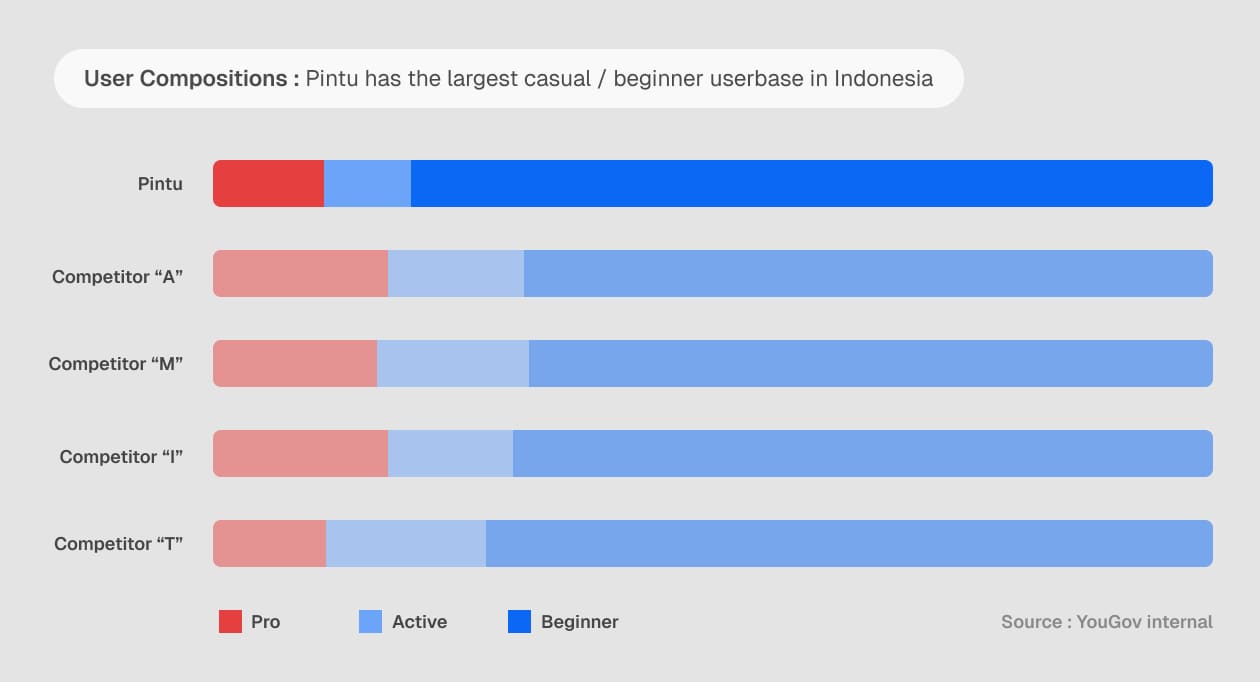
Most Pintu users are beginners drawn to our app’s simple trading experience. The company was incentivised to prioritise Pro activity that generates more transaction volume. On the surface, this looked like an adoption problem: we don’t onboard as many active traders as we want. Releasing more features or driving traffic to Pintu Pro did not improve outcomes. The underlying issue was not adoption, it was that Retail and Pro had diverged into separate product realities, forcing users to context-switch between incompatible systems.
Problem Context
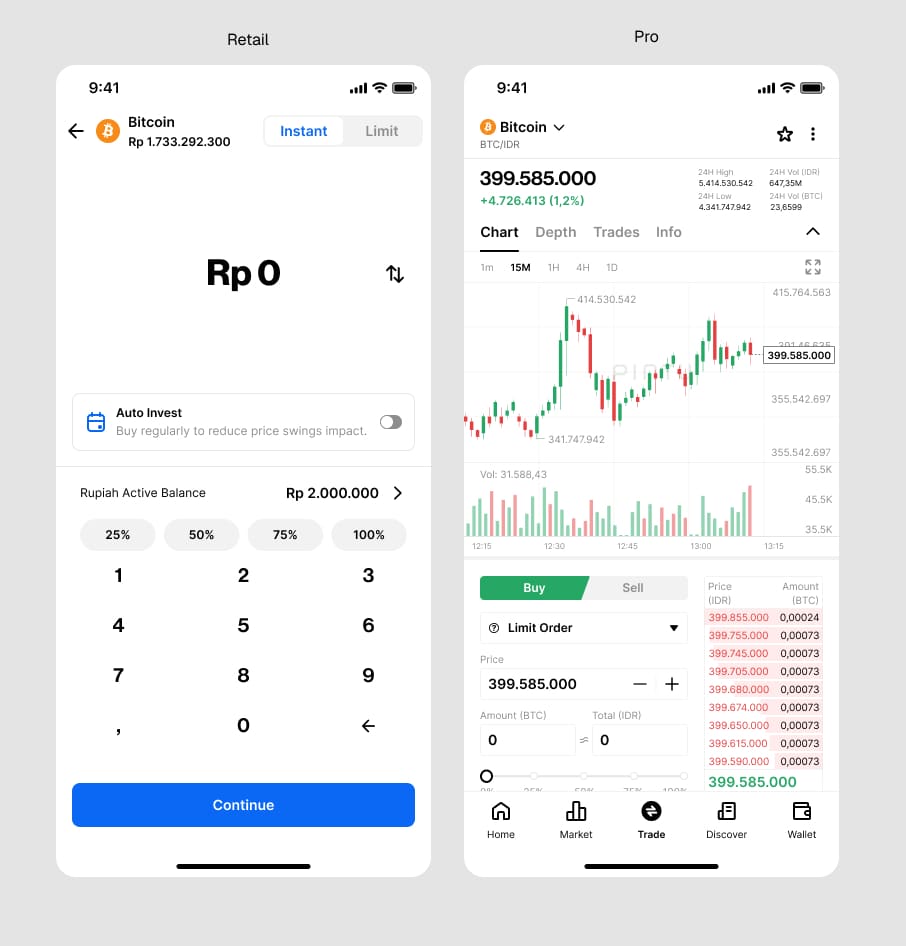
Pintu was initially built to be the most user-friendly and easy-to-use crypto app in Indonesia, attracting beginners entering crypto trading for the first time. Two years in, Pintu Pro was introduced as a separate space within the app to address a growing churn issue: experienced users who had outgrown the platform were leaving for other exchanges that offered a true pro environment.
Unlike most exchanges that start from Pro architecture and simplify downward, we were building in the opposite direction. Pintu Pro requires an entirely new backend designed to handle high transaction frequency and a real orderbook trading model, whereas Retail (our starting point) operated on an RFQ model.
While the new Pintu Pro’s backbone is suitable to address active traders’ needs, it did not have feature parity with Pintu Retail at launch. Balance and market pairs operated independently across both models. Asset management was fragmented, and users had to switch back and forth between Retail and Pro to trade certain asset pairs or access features that only existed in one environment.
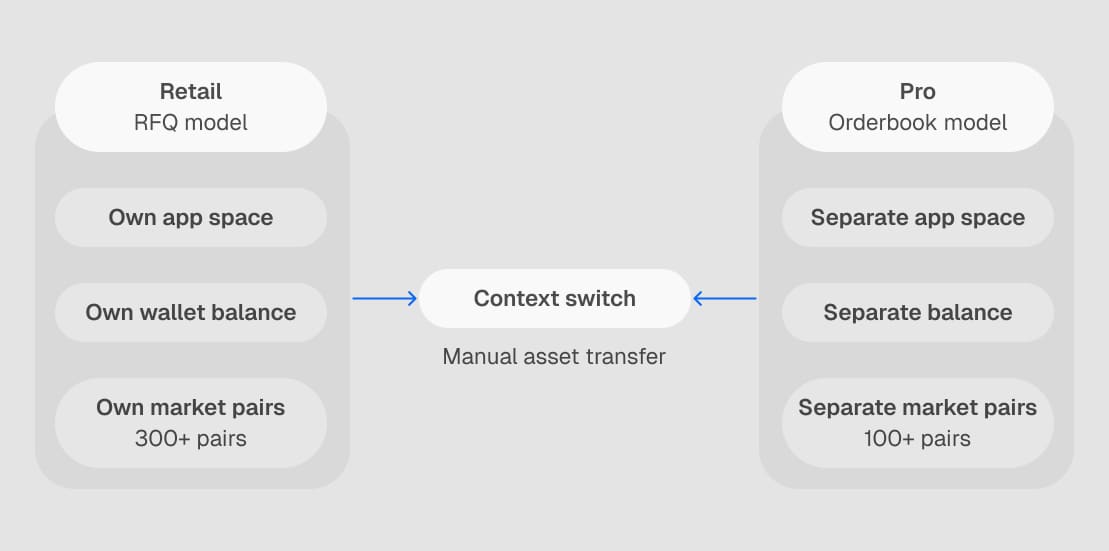
Because incremental improvements and new feature releases consistently showed clearer short-term impact, these fundamental UX issues were repeatedly deprioritised. The fragmentation was visible, but never urgent enough to displace other roadmap items, until the costs became impossible to ignore.
Why Infrastructure Was the Wrong Diagnosis
The problem was initially framed as an infrastructure issue. Users churned to different exchanges for a true trading experience such as orderbooks and more advanced trading orders. However, these investments failed to change user migration patterns, indicating that they were not the primary constraint.
To validate this, we ran user interviews across beginner, active trader, and churned users. Even brought in external collaborators such as YouGov to stress-test our findings. That finding reframed the diagnostic question, and made the infrastructure investment look like the wrong answer to the right problem.
Market Constraints: User Profitability and Inefficient Conversion
Users don’t use an exchange only for their features — they are looking for profitability. One challenge in achieving this is regulatory constraints. Tax on every crypto trade makes it harder to gain profit, and releases of trending assets are delayed due to the lengthy regulation approval process. These factors make it challenging to compete on profitability with foreign exchanges.
Pro traders are habitual. They accumulate capital, trust, and familiarity on exchanges they use, creating high switching costs. Given that churn is unlikely unless a major failure happens, acquiring pro and active traders directly is inefficient.
Broken Progression from a Fragmented System
Pintu Pro was built with its own wallet balance and market pair selection, creating UX friction that forces Pro users into lengthier flows, fewer market options, and incomplete features compared to Retail. When users graduate from beginner to advanced trading and switch to Pro, they should feel more powerful. Instead, the experience feels limiting and downgraded.
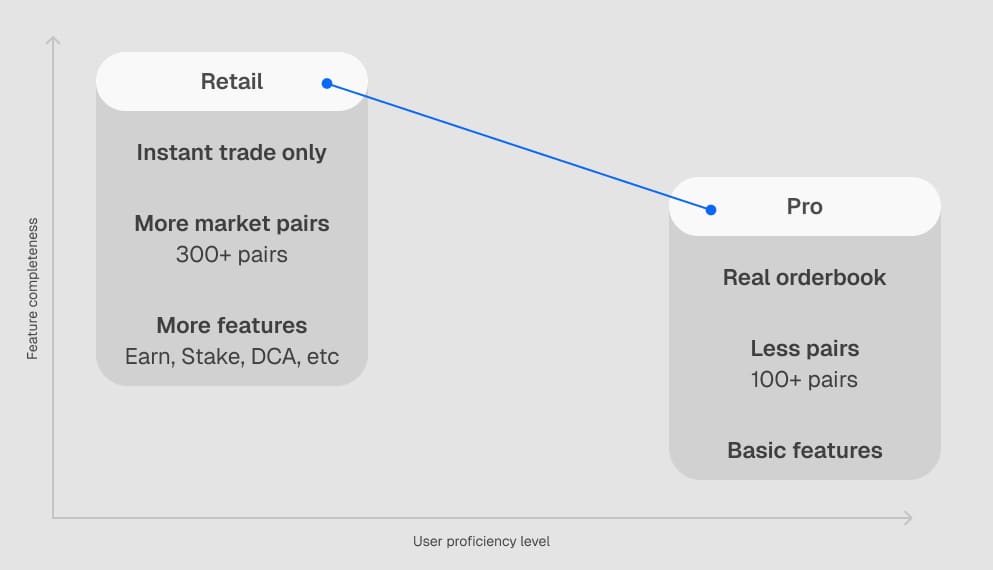
High switching costs make direct conversion of experienced users structurally inefficient. At the same time, fragmentation between Retail and Pro broke the expected progression from beginner to advanced trading by increasing friction and reducing perceived power.
From Adoption to Progression
Given these constraints, optimising for Pro adoption in isolation was an inefficient strategy. The reframe shifted the governing design principle from adoption to progression.
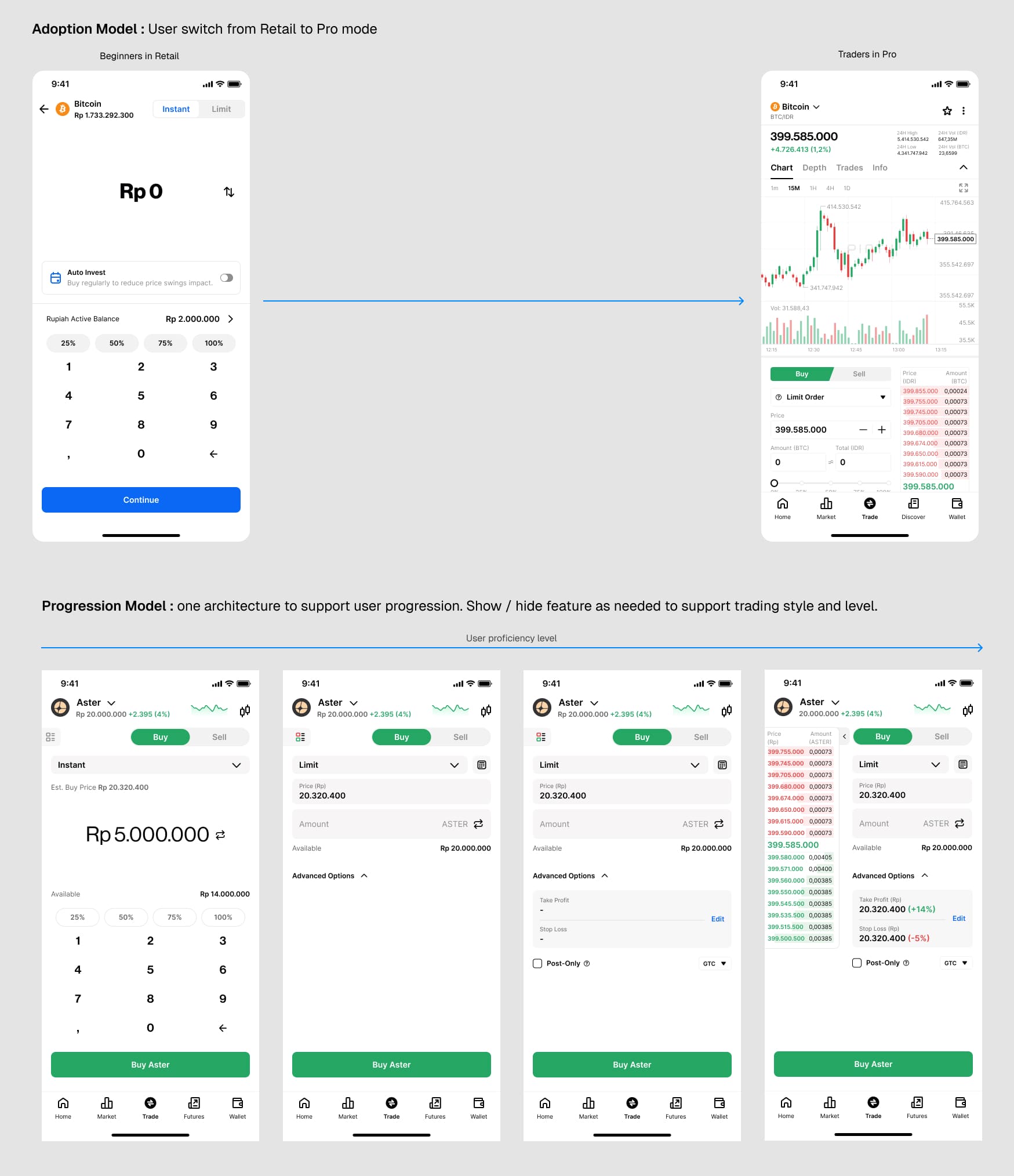
Progression required that advancement increase capability without increasing friction. Parallel balance systems, isolated market lists, and mode-switching were no longer acceptable design patterns. They penalised users at exactly the moment the product should be rewarding them.
Organisational Alignment & Strategic Impact
The reframing required alignment at the executive level because it implied a significant architectural commitment. Unification was not a low-cost enhancement but a foundational shift in how Retail and Pro would evolve.
When I introduced the progression perspective during the quarterly product review, it reframed Pro growth from an adoption problem to a lifecycle integrity issue. Initial evaluation focused on delivery cost and minimising risk. However, churn analysis, external market research, and internal migration data consistently indicated that incremental Pro feature expansion would not fix or propel us toward the business goals we had.
This resulted in a directional shift in roadmap prioritisation. Unification work was incorporated into annual KPIs, and fragmentation impact became a factor in evaluating new feature proposals.
Execution & Outcomes
Structural Changes : One Pintu Platform
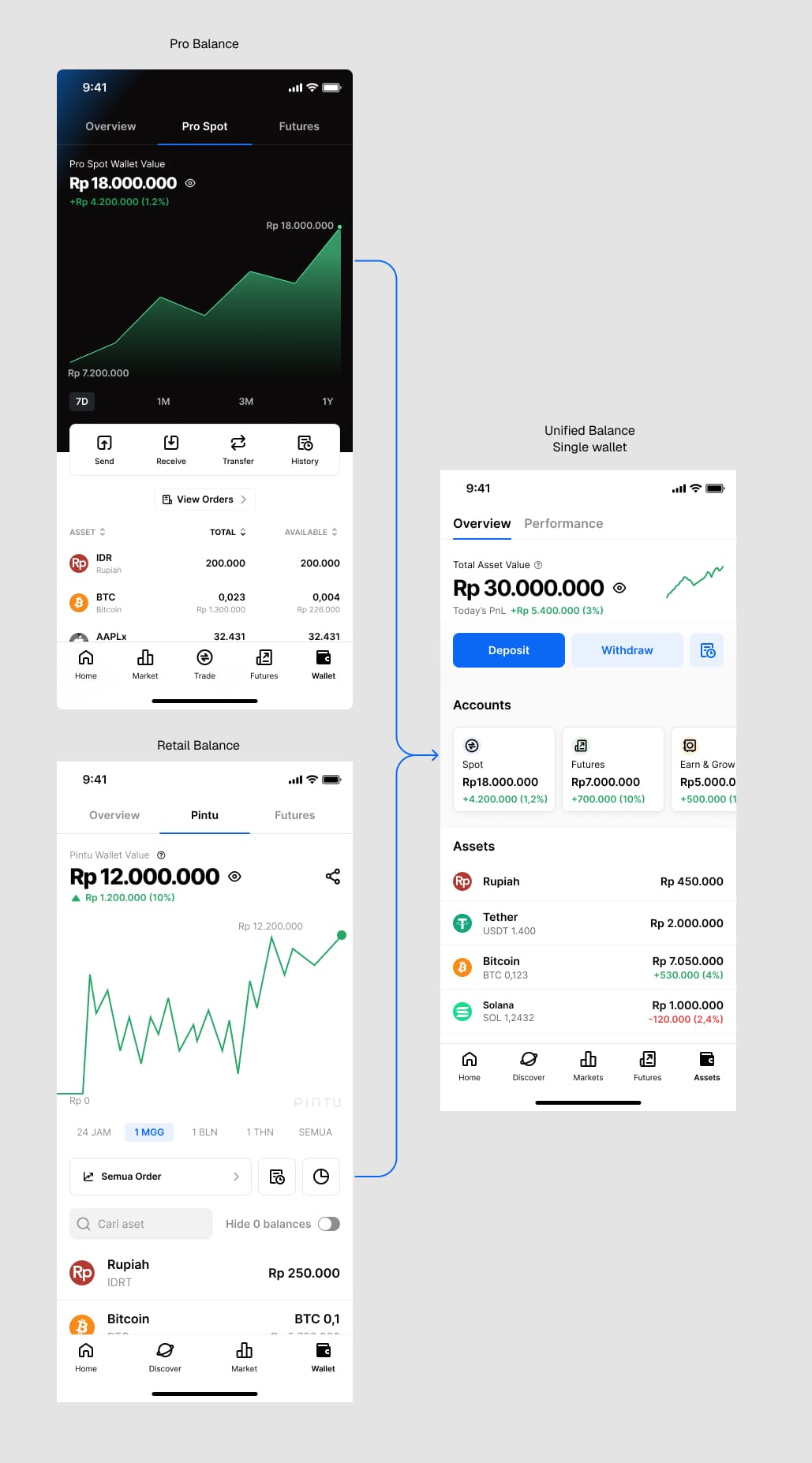
Balance unification between Retail and Pro became the highest priority on the roadmap. It was the most direct source of user context-switching, and resolving it was a prerequisite for almost everything else.
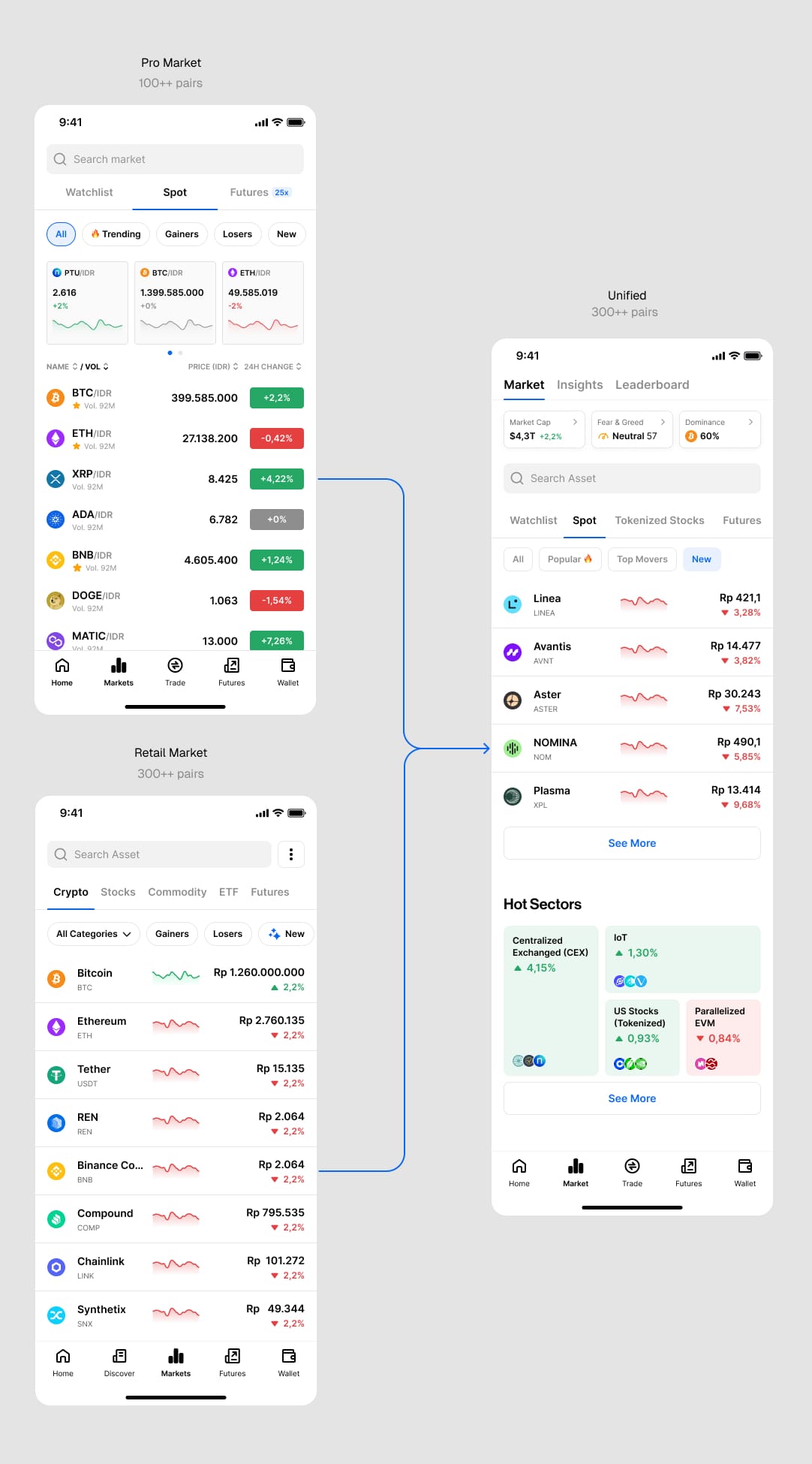
Market list unification and improved market discoverability followed as the next highest priority, addressing the fragmentation that made the platform feel slower than it actually was.
Roadmap Tradeoffs
Reallocating engineering capacity toward unification required deliberate tradeoffs. Planned advanced order types were delayed. Community chat features, despite their importance in closing the competitive gap, were sequenced to a later cycle. Web platform expansion was temporarily paused. These decisions were evaluated against long-term lifecycle leverage to prioritize foundational reinforcement.
Impact
Early signals validated the direction:
- Balance unification and market pair consolidation eliminated manual transfers and mode-switching, increasing continuity between Retail and Pro trading and overall market visibility.
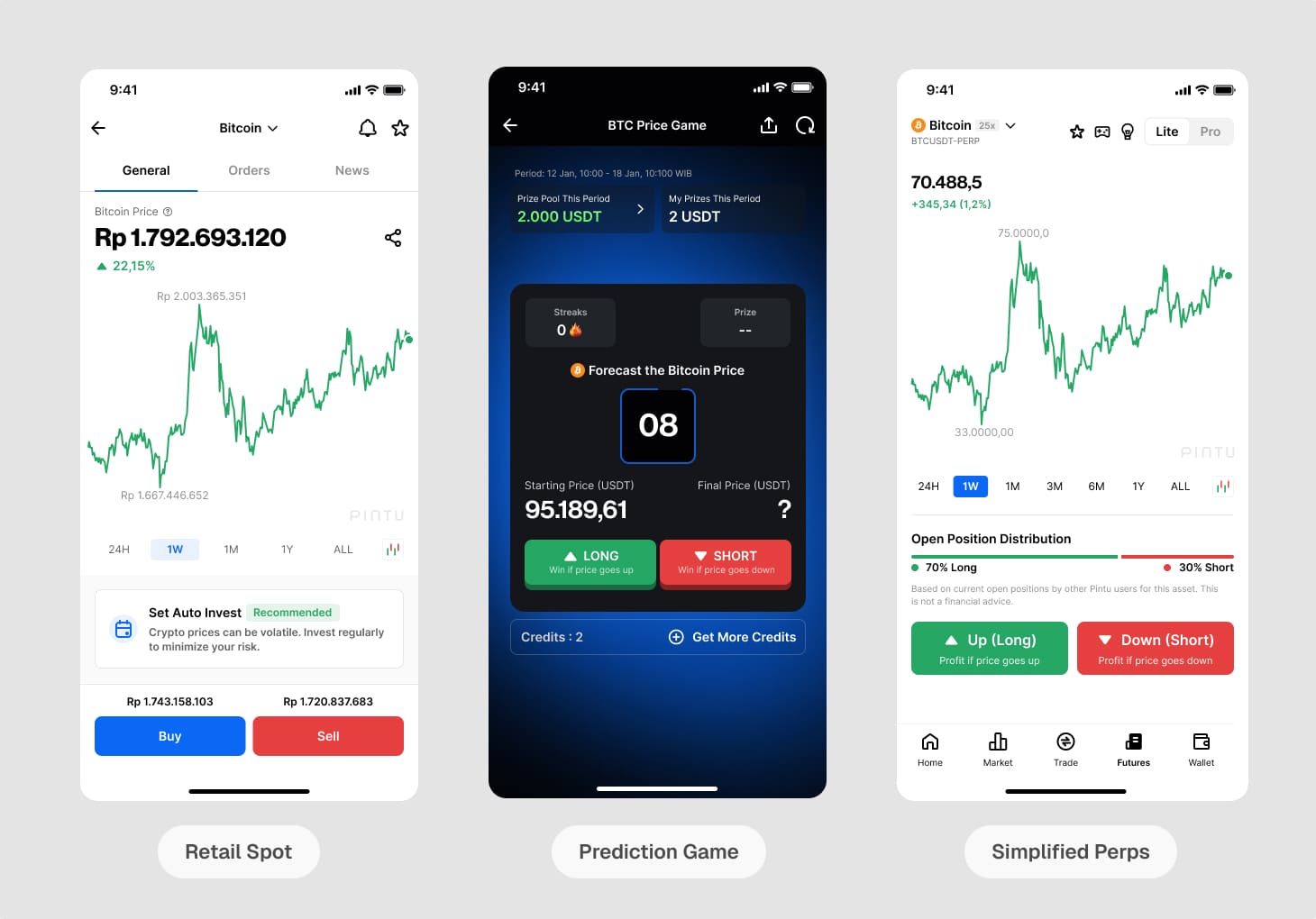
- Other projects start to follow this design principles and sequencing (such as Price game/simpified perps, ensuring a smoother user journey when they graduate to a more active trader.
Read : Building the Bridge From Retail Trading to Perps case study for more details about this.