
Pintu already offered a full Pro futures product. It was one of the most requested feature that users wanted to try. But almost as fast as they arrived, they left. The churn on new futures traders was high.
Problem Context
Perps (perpetual futures) are the highest-engagement, highest-value product in most crypto exchanges.
Pro Futures was built to serve and retain a slice of power users and active traders, and it does the job well: a powerful interface across app and web, with cross margin, time-in-force controls, slippage tolerance, take-profit/stop-loss, stop orders, and a long list of advanced tools built for serious traders.
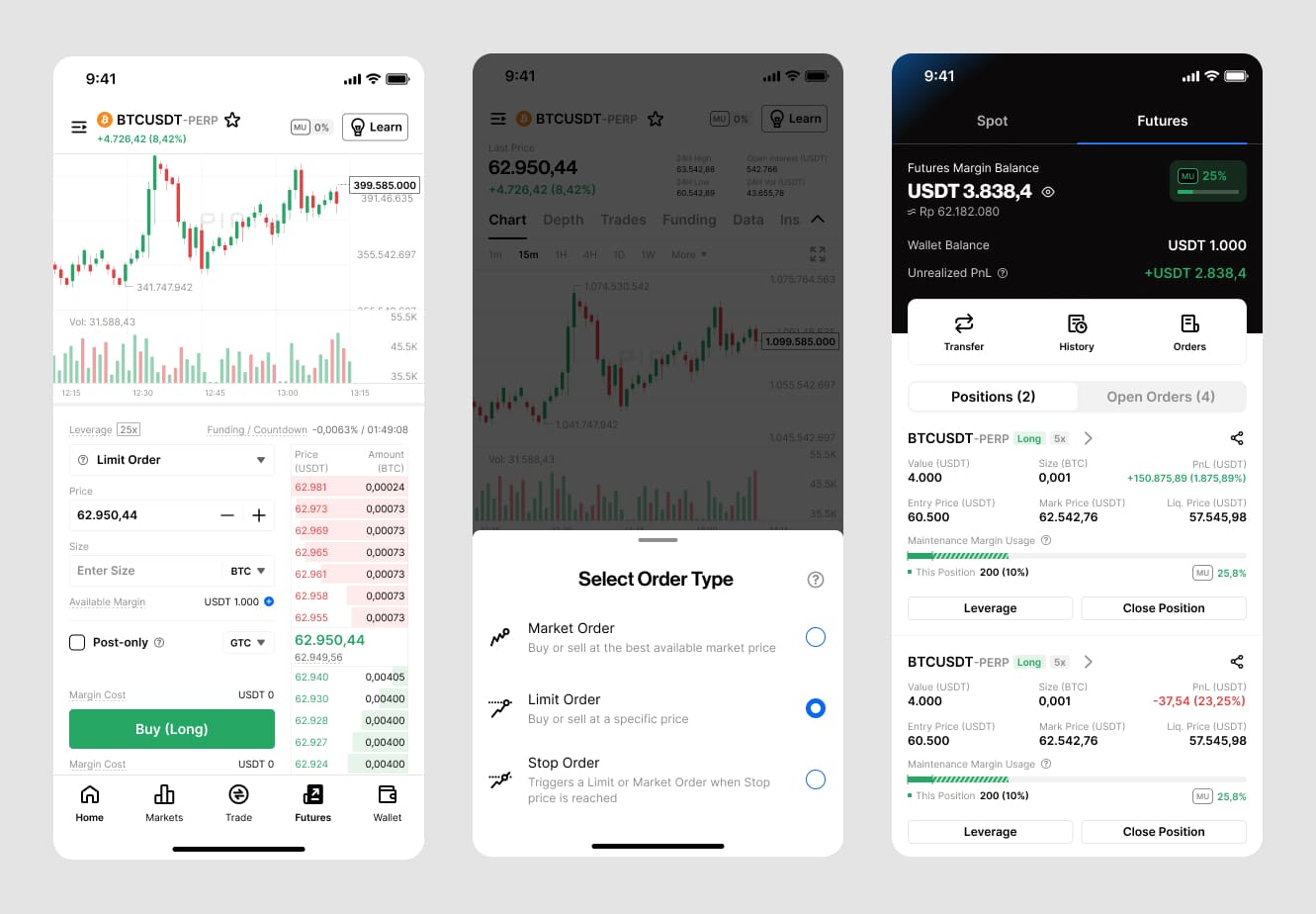
It’s an excellent terminal for people who already know how to fly. The trouble is that it assumes a pilot, while most of our users had never left the ground.
Pintu is, first and foremost, a beginner’s app. The overwhelming majority of our users are retail traders who came for the simplest possible way to buy and hold crypto.
What We Found
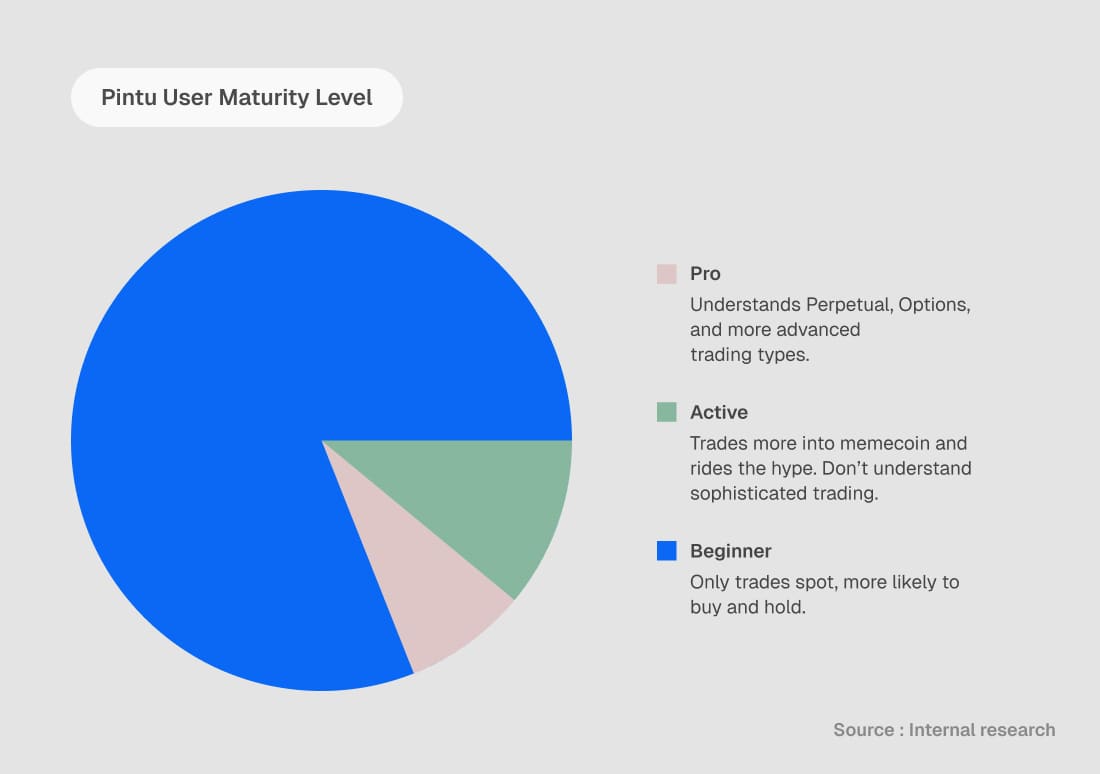
We surveyed and interviewed users who had tried futures and churned, alongside those who wanted to try but never did. One answer buried every other: they didn’t understand how futures works.
-
User churned because they didn’t understand what they were doing. Even users who came out ahead described the experience as confusing and stressful. Many couldn’t describe how a perpetual differs from spot, or what taking a long or short position actually meant.
-
The gap between Retail and Pro was an experience gap, not a feature gap. Retail trading on Pintu is deliberately simple: pick an asset, buy, hold, sell. Pro futures is a dense, information-rich terminal built for people who already know the mechanics.
-
For many, the friction started before the first trade. A large share told us they didn’t know how to reach futures at all, or how to move money into the futures wallet to fund a position.
And when we asked what would give them the confidence to try, most of them wants a demo or simulation mode to learn without real money on the line.
The Strategy: A Bridge, Not a Feature
The instinct in situations like this is to simplify the Pro product and strip features until it’s approachable. That’s the wrong move: it degrades the tool for the people who rely on its depth, and it still doesn’t teach anyone the underlying model.
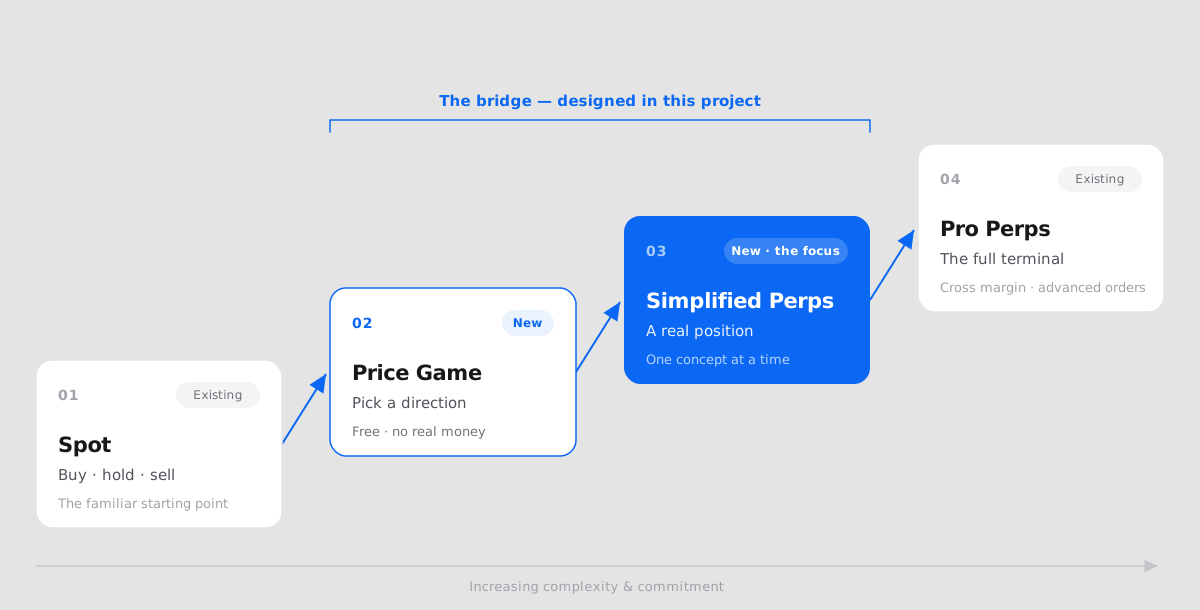
Instead, we built Simplified Perps, a retail-grade futures experience that sits between spot trading and full Pro perps. It is deliberately not feature-complete. Its entire job is to move a first-time futures trader along a learning curve, and then hand them to Pro when they’re ready.
Users had asked loudest for a demo mode. A full interactive simulation, though, is a heavy engineering effort. So we answered the same need at a fraction of the cost: a non-interactive demo that walks users through the flow before they commit, paired with a lightweight price-guessing game — will the price go up or down — that’s free to play with a small reward for taking part.
Key Design Decisions
Speak in direction, not derivatives
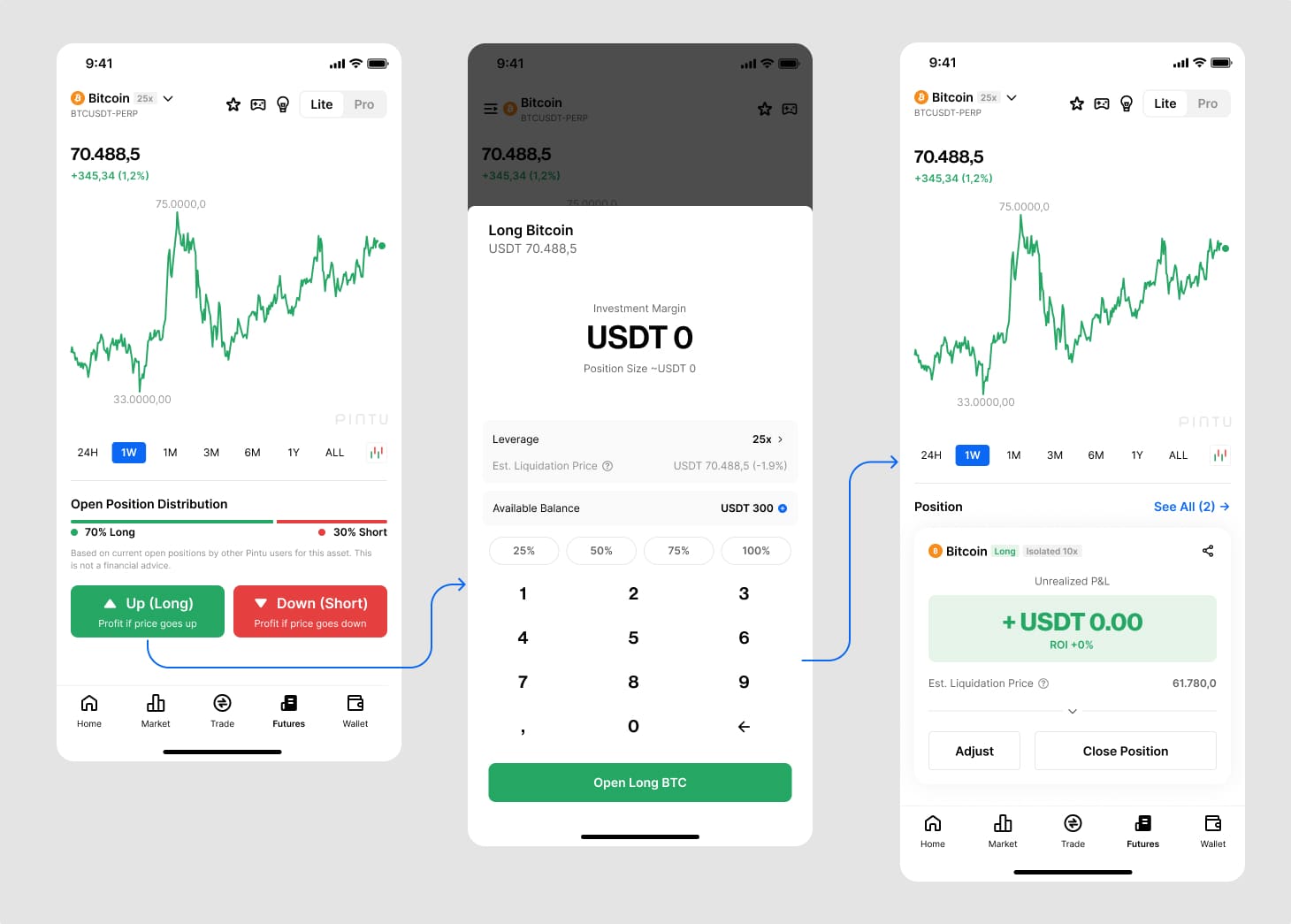
The order starts on the same asset page a retail user already knows : the chart, price, and familiar layout.
The two actions are framed as a simple call: Up or Down the same mechanic as the price game, so a user arriving from it meets an interface they’ve already used. Long and Short still ride alongside in parentheses: regulation requires the formal terms be shown, but nothing about the decision depends on knowing them.
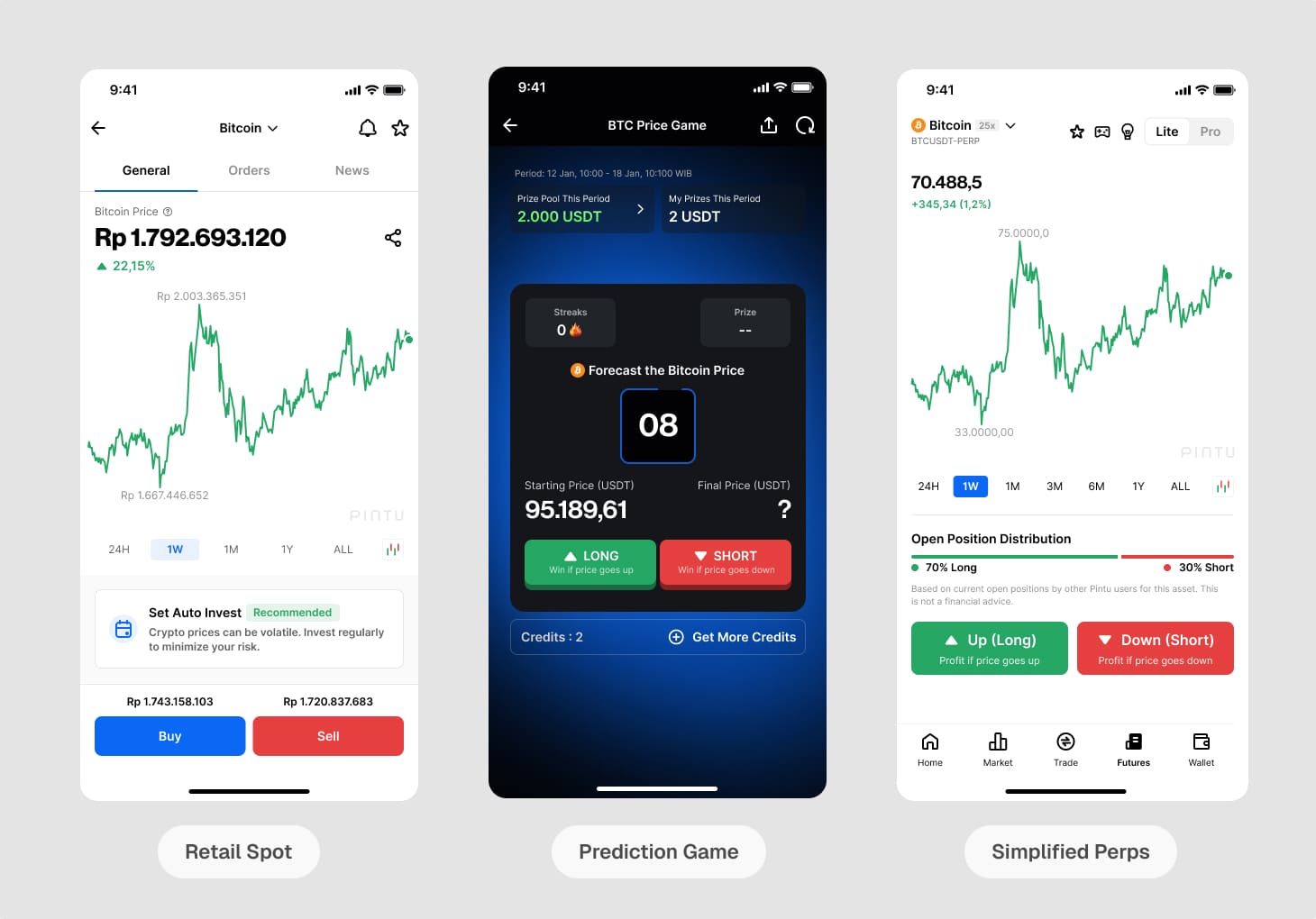
Reducing the first decision to a direction on a familiar chart lets users act on an intuition they already have, rather than translating that intuition through unfamiliar space before they can even begin.
Guardrails that catch expensive mistakes
Risk is contained by default. Simplified Perps is locked to isolated margin: a position can only ever lose the margin assigned to it, and never reaches into the rest of the user’s funds. It’s less flexible compared to Cross, but are safer and easier to understand.
The design principle here is subtraction with intent. We kept the mechanics that make perps perps : a leveraged position, P&L that moves with the market, the reality of liquidation, while also removing the density that makes Pro intimidating.
Teach in context, in layers
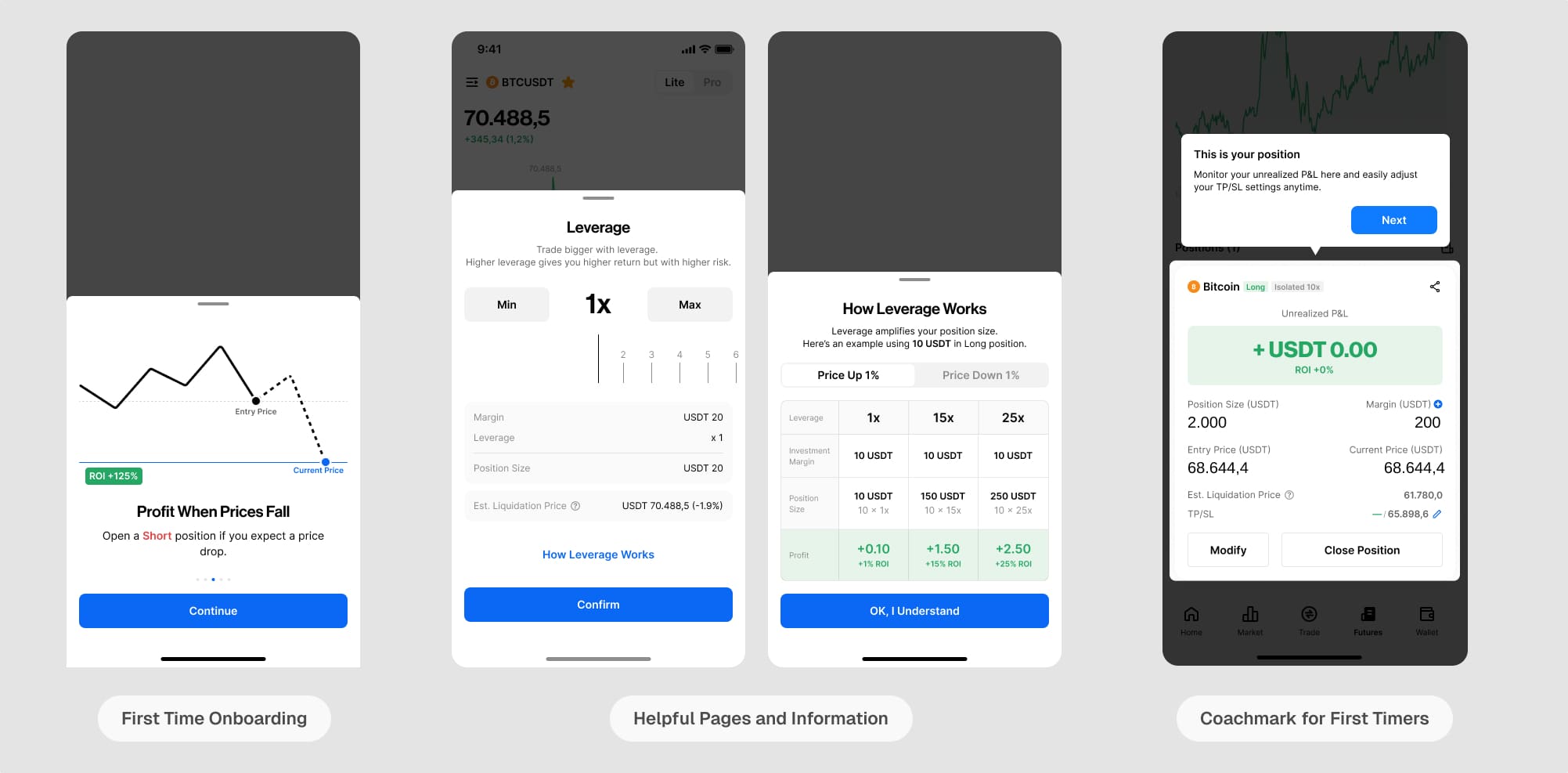
The concepts users named as most confusing, such as margin, leverage or liquidation are taught in layers and contextual. Each surfacing at the moment it’s needed.
A position surface built to be understood
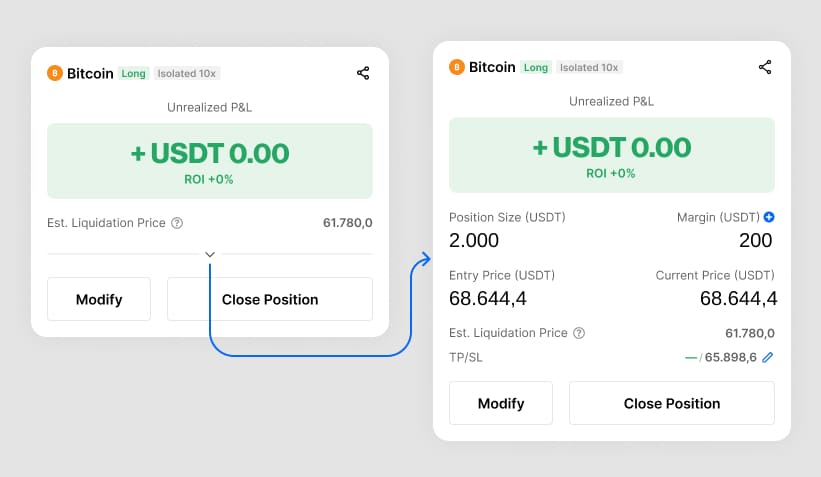
Managing an open position is where beginners feel most out of control. So the position card leads with the one thing they actually track : unrealized P&L and ROI and the estimated liquidation price. There are 2 actions here:
- Modify allows user to add / remove margin and do TP/SL, and
- Close Position for user to realize their uPnL gain / loss.
Expanding the card reveals the full picture for users who needs it : position size, margin, entry and current price, liquidation price, and an editable TP/SL, without ever crowding the headline for the users who don’t.
Then, graduate to Pro
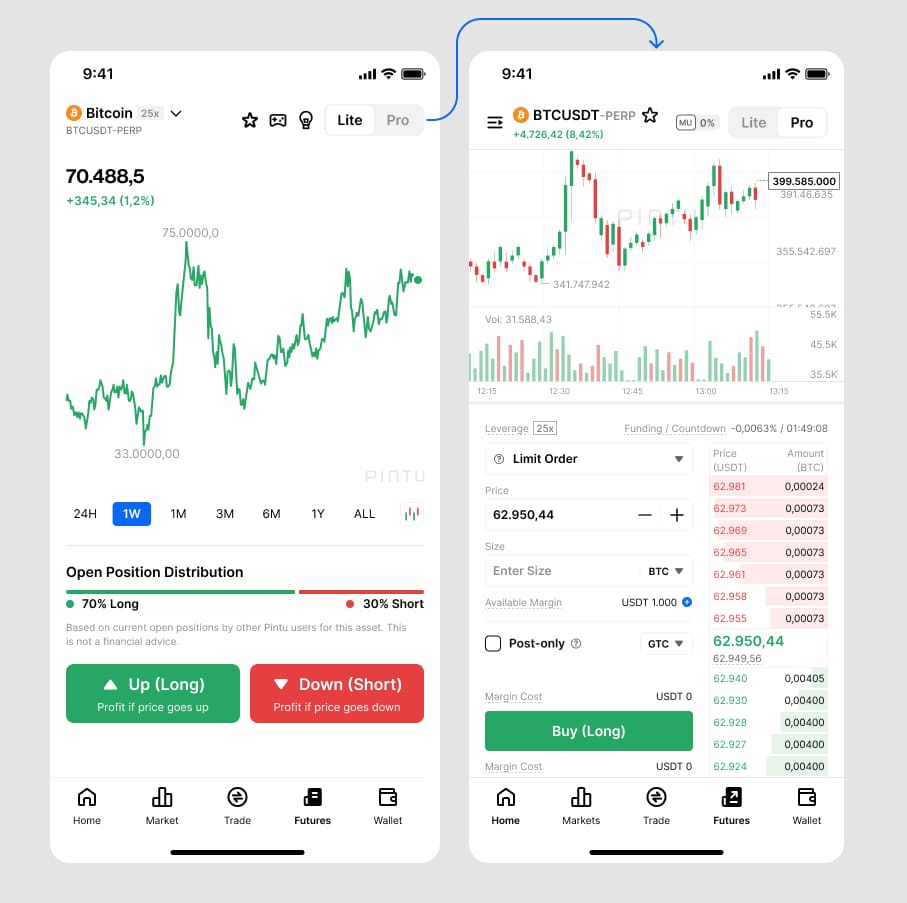
Simplified Perps is framed throughout as a starting point, and it’s designed to make moving up to Pro feel like the natural next step rather than a leap.
Result
As Simplified Perps approaches release, we defined the measurement framework that will decide whether the bridge actually carries anyone across.
-
First-Position Conversion: Tracking the share of retail users who open a futures position at all, validating whether a familiar, guarded flow can move beginners across a gap that previously stopped them.
-
Retention of First-Time Traders: Measuring return activity against the existing Pro-direct baseline, testing whether comprehension — not exposure — was the real driver of churn.
-
Progression into Pro: Watching how many graduate from Simplified Perps to the full terminal, the number that decides whether the ladder is genuinely a ladder rather than a dead end.